

I spent the better part of two years convincing myself retinol was not for me. Too drying, I thought. Too harsh. I had seen what happened to my friend Carol after she layered a prescription-strength retinoid under her regular night cream and woke up with a face like a sunburned peach. I was 54, my skin was already on the dry and thin side, and I was not interested in that kind of excitement.
Then I started reading the actual science, not the beauty marketing, and I changed my mind. Retinol is still the most studied over-the-counter ingredient for reducing fine lines, evening skin tone, and improving texture after 50. Nothing else on the drugstore shelf has the same track record. The problem is not the ingredient. The problem is how most women start. Too much, too fast, too often. Mature skin, skin that has already lost some of its lipid barrier and oil production, just cannot tolerate a full nightly dose right out of the gate.
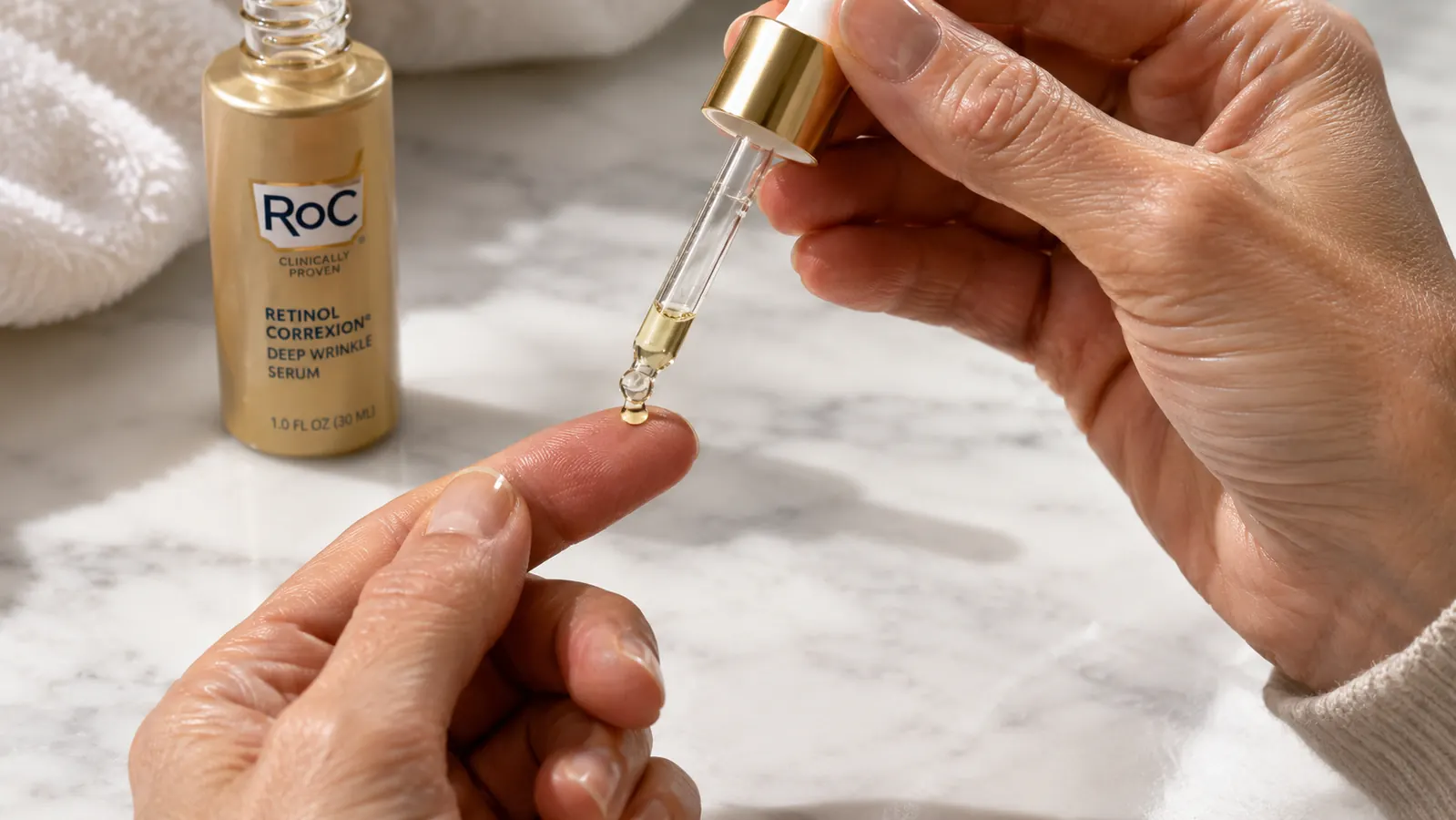
What follows is the introduction sequence I developed through testing, which now includes regular use of the RoC Retinol Correxion Deep Wrinkle Serum on my own face over the past four months. It is not complicated. But the order and the frequency matter enormously, and most guides skip the details that make the difference between tolerable and genuinely useful.
If you're reading this before buying, start here: the RoC Retinol Correxion Serum is what I use on my own skin and recommend to readers who are starting retinol for the first time over 50.
It uses a stabilized retinol formula with ascorbic acid, packaged to stay potent. It is strong enough to do real work without being so aggressive that sensitive mature skin cannot adapt.
Amazon Check Today's Price on Amazon →What to Expect Before You Start
Retinol works by speeding up how fast your skin cells turn over. That sounds great, and eventually it is, but in the first few weeks your skin is adjusting to a new pace. Some mild flaking, a little tightness, maybe some pink areas around the nose and chin are completely normal. This is not your skin rejecting the product. It is your skin catching up.
The adjustment period for women over 50 tends to run about six to eight weeks. After that, most people stop experiencing irritation and start seeing the effects they read about: finer-looking lines, smoother texture, more even tone. The key is surviving those first eight weeks without bailing. The guide below is designed to get you through that window with as little drama as possible.
Step 1: Stock Your Bathroom Before You Open the Serum
Before you apply a single drop of retinol, make sure you have two other things ready to go: a gentle, fragrance-free moisturizer and a broad-spectrum SPF 30 or higher sunscreen. These are not optional extras. They are load-bearing parts of the method.
Retinol increases your skin's sensitivity to the sun, which is the opposite of what you need when you're already working to reverse photoaging. If you skip sunscreen, you are partially canceling the benefits you're trying to create. A thick, simple moisturizer like CeraVe or Vanicream is what I keep on hand for the nights when my skin feels tight after applying the serum. Having it within reach means I do not skip it.
While you're at it, set aside anything with active acids, vitamin C serums, and other strong actives for the first four weeks. You can bring them back in later once your skin has adapted. Trying to run several actives at once is one of the most common reasons new retinol users quit in week two.
Step 2: Start With Two Nights Per Week (Not Every Night)
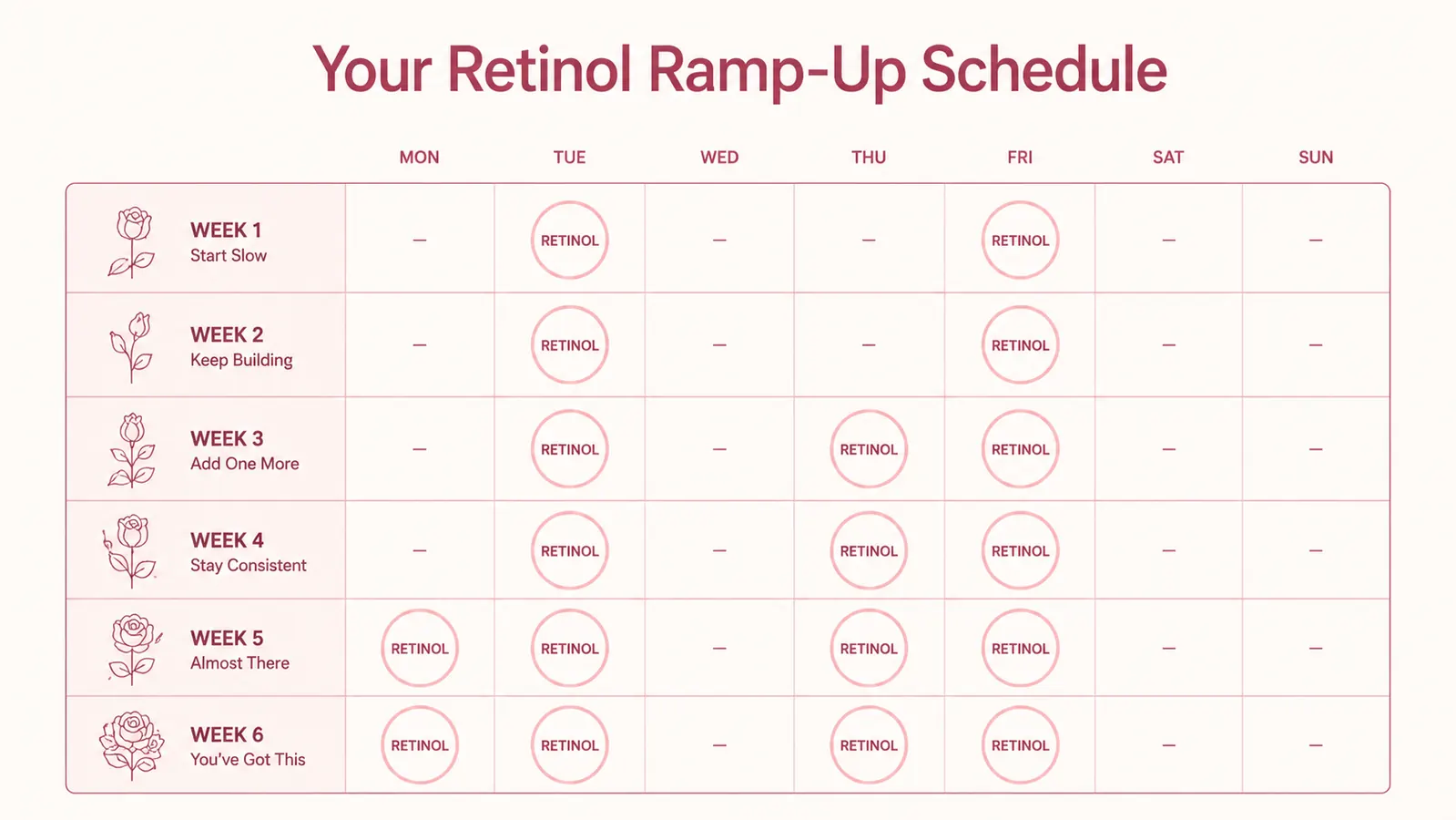
The packaging on most retinol serums, including the RoC Correxion, suggests nightly use once you've tolerated it. That is the eventual goal. But starting at twice a week for the first two to three weeks gives your skin barrier time to adjust without going into full protest mode.
I chose Tuesday and Friday as my retinol nights in the beginning. That spacing is deliberate. It gives your skin a full day to recover between applications and keeps you far enough apart that if there is any residual tightness, it has cleared before the next application. Most women I know who failed with retinol were applying it every other night before their skin was ready.
After two to three weeks at twice a week without significant irritation, move to three nights. Give that two more weeks. Then step up to four or five. Many women over 60, especially those with drier or thinner skin, land at four nights and stay there. You do not have to reach daily use to get real results. Consistency matters more than frequency.
Twice a week for the first month is not slacking. It is the only approach that actually works for mature skin long enough to see what retinol can do.
Step 3: Apply the Right Amount in the Right Order
On your retinol nights, start with a clean, fully dry face. Damp skin pushes the serum deeper into the skin and amplifies irritation in the early weeks. Pat your face completely dry after cleansing and wait a full minute before you touch the serum. That minute feels unnecessary until you skip it once and feel the difference.
Use about three to four drops of the RoC serum total. Press it gently into your forehead, cheeks, chin, and neck with your fingertips. Do not rub. Pressing helps absorption without mechanical irritation. Avoid the immediate eye area and the creases around your nostrils, where skin tends to be thinner and more reactive.
Wait another minute for the serum to sink in, then apply your plain moisturizer on top. In the first few weeks especially, the moisturizer is not an afterthought. It seals in hydration, softens the retinol experience, and protects your barrier while it is still adjusting. If you find the serum alone is too intense even at low frequency, you can apply a thin layer of moisturizer first, then the serum on top. This is sometimes called the sandwich method and it genuinely reduces irritation without eliminating results.

Step 4: Know the Warning Signs That Mean You Need to Back Off
There is a difference between normal adjustment and actual damage, and it helps to know what you are looking at. Mild flaking, some tightness, and a slightly pink look for a day after application are all within normal range. They typically ease up after the first three or four weeks as your skin adapts.
Burning that lasts more than an hour after application, cracked or weeping skin, or hives are signs to stop immediately, wash your face with cool water, and let your skin recover for at least a week before trying again at lower frequency. True contact irritation is not common with over-the-counter retinol, but it does happen, and pushing through it does not help. If you hit this wall three times at the lowest frequency, retinol may not be the right fit, and a hydrating peptide serum is a solid alternative.
Also worth mentioning: a mild breakout in the first few weeks is not unusual. Retinol speeds up cell turnover, which means anything trapped under the surface comes up faster. This purge usually clears by week four to six. It is not new acne. It is old congestion moving out. Most women I have talked to who pushed through the purge were glad they did.
Step 5: Give It Eight Weeks Before You Judge the Results
This is the step most people skip, not because they do not care, but because the beauty industry has conditioned everyone to expect two-week miracles. Retinol does not work in two weeks. The cellular mechanism it relies on operates on your skin's own regeneration cycle, which for women over 50 runs approximately 28 to 40 days. You are not going to see meaningful changes in fine lines or texture until you have been through at least two full cycles, which puts the earliest honest expectation at six to eight weeks.
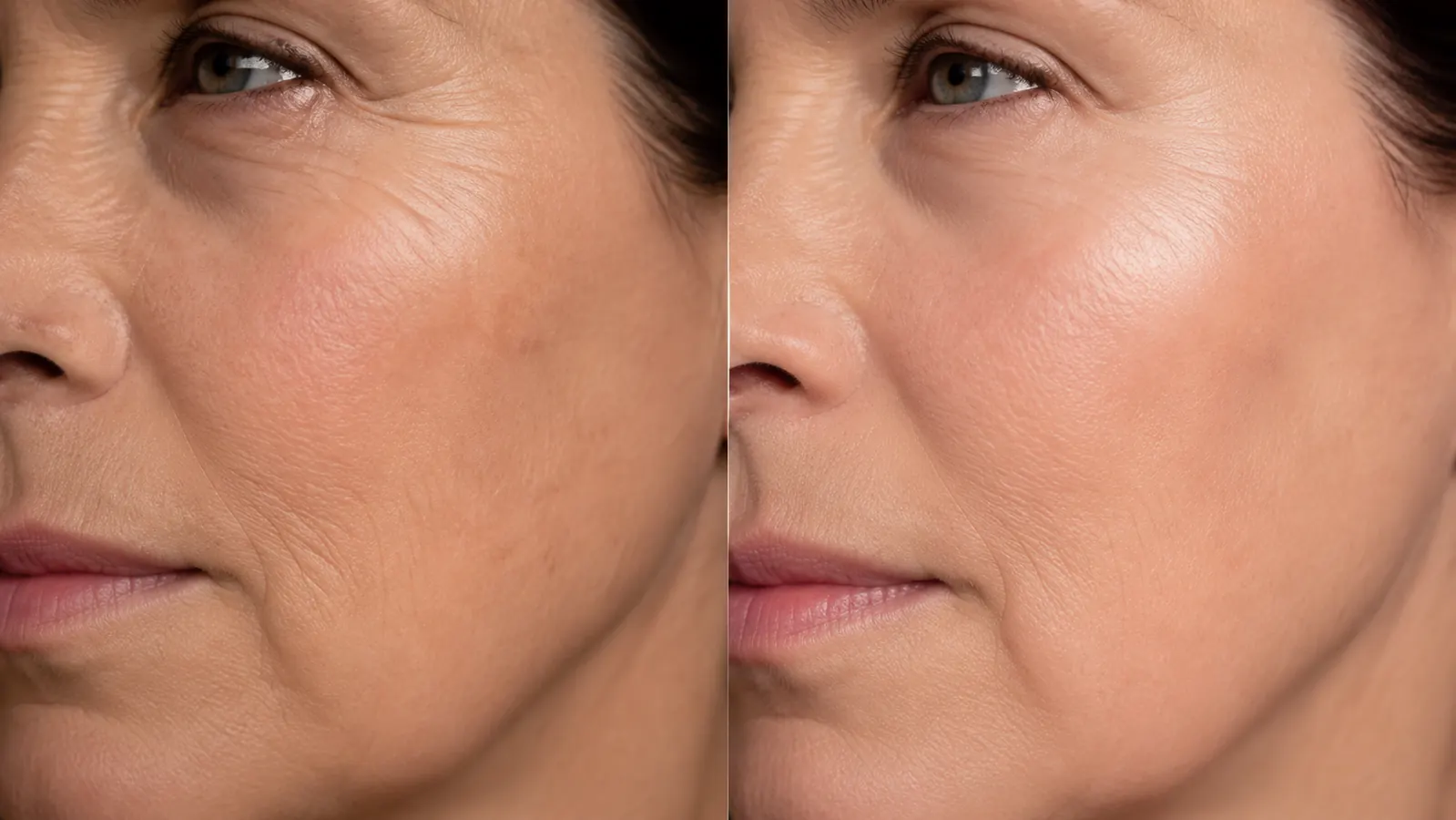
I took a photo of the same spot on my left cheek on day one and again on day 56. That is the only comparison I trust more than memory. Memory smooths things over in both directions. A photo taken in the same light, at the same angle, is honest. After eight weeks at low-to-moderate frequency with the RoC serum, I could see a visible reduction in the depth of my horizontal forehead lines and a smoother texture on my cheeks. Not dramatic. Not magazine-cover. But real and worth continuing.
After the eight-week mark, if you have been consistent and your skin has tolerated the ramp-up, you can start increasing frequency toward four or five nights a week. At this point your skin is no longer adjusting, it is building on a foundation, and the results continue to improve for as long as you use it. That is the part nobody mentions in the two-week review. Retinol is a long-term investment, not a quick treatment.
What Else Helps
Retinol does the heavy structural work, but a few supporting habits make the whole thing work better. Hydration is the biggest one. Skin that is well-hydrated from the inside, plain water, not supplements, tolerates retinol noticeably better than chronically dehydrated skin. On my retinol nights I also use a humidifier in my bedroom during dry months. The ambient moisture genuinely reduces the tightness I feel the next morning.
The second supporting habit is sunscreen, every single morning without exception. I cannot say this more plainly: retinol and daily sun protection are a package deal. The research on retinol was largely done on people who wore sunscreen consistently. Running retinol without sunscreen is like servicing your car engine while leaving the oil drain unplugged. You are partly undoing the work.
Third: simplify everything else in your routine while you are getting started. Fewer products, not more. One cleanser, one serum on retinol nights, one moisturizer, and sunscreen in the morning. Add your other products back in after week six once you know how your skin is behaving. Most people who struggle with retinol are also doing too much at once, and they have no idea which product is causing the issue.
Finally, be patient with the in-between weeks. Around week three and four, you may feel like nothing is happening. The irritation has calmed down, you do not see obvious results yet, and it is tempting to think you are wasting your time. This is the window where most people quit. It is also the window right before things start working. Stay the course through week six, keep your routine simple, and take another photo. The difference between week two and week eight is almost always more than you expected.
Starting with a stable, well-formulated retinol serum makes the whole ramp-up easier. This is what I use.
The RoC Retinol Correxion Deep Wrinkle Serum has a stabilized formula, a track record across more than 15,000 Amazon reviews, and a price that makes the long-term commitment feel reasonable. If you are going to give retinol a real try, start with something that has earned its reputation.
Amazon Check Today's Price on Amazon →