
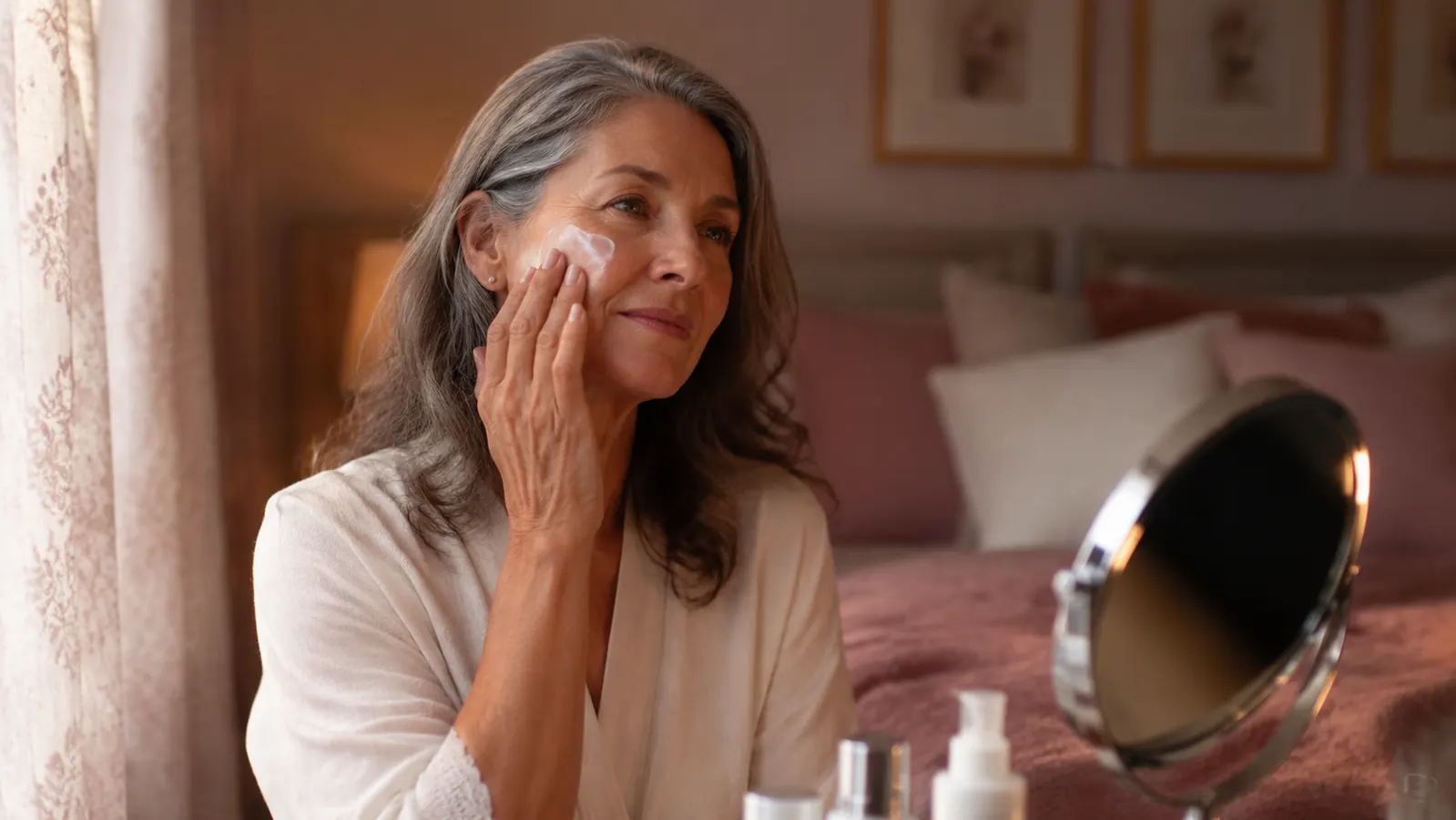
My dermatologist, Dr. Renata Chow, has never been one for flattery. She said, at my annual skin check last October, that my forehead lines had deepened noticeably since the year before and that the texture across my cheeks was getting rough. She is 41 and her skin looks like a calm lake. I am 61 and mine was starting to look like a topographic map. She did not say that last part. I did.
She suggested I add a retinol night cream. Not a serum, not a prescription tretinoin, just an over-the-counter retinol moisturizer used every night after washing my face. She said to give it at least eight weeks before expecting anything, to use sunscreen every morning without fail, and to keep my expectations realistic. Fine lines take time. Deep furrows take longer. Some do not budge much at all.
I had avoided retinol for years, if I am being honest. I am a retired skincare writer. I have read the studies and I know retinol works. But I also know it can peel, sting, and turn mature dry skin angry, and at 61 my skin is already thinner and easier to irritate than it was at 45. So I kept telling myself I would start next season. Then Dr. Chow said the thing about the topographic map. Well, she said the part about the lines deepening, which amounted to the same thing.
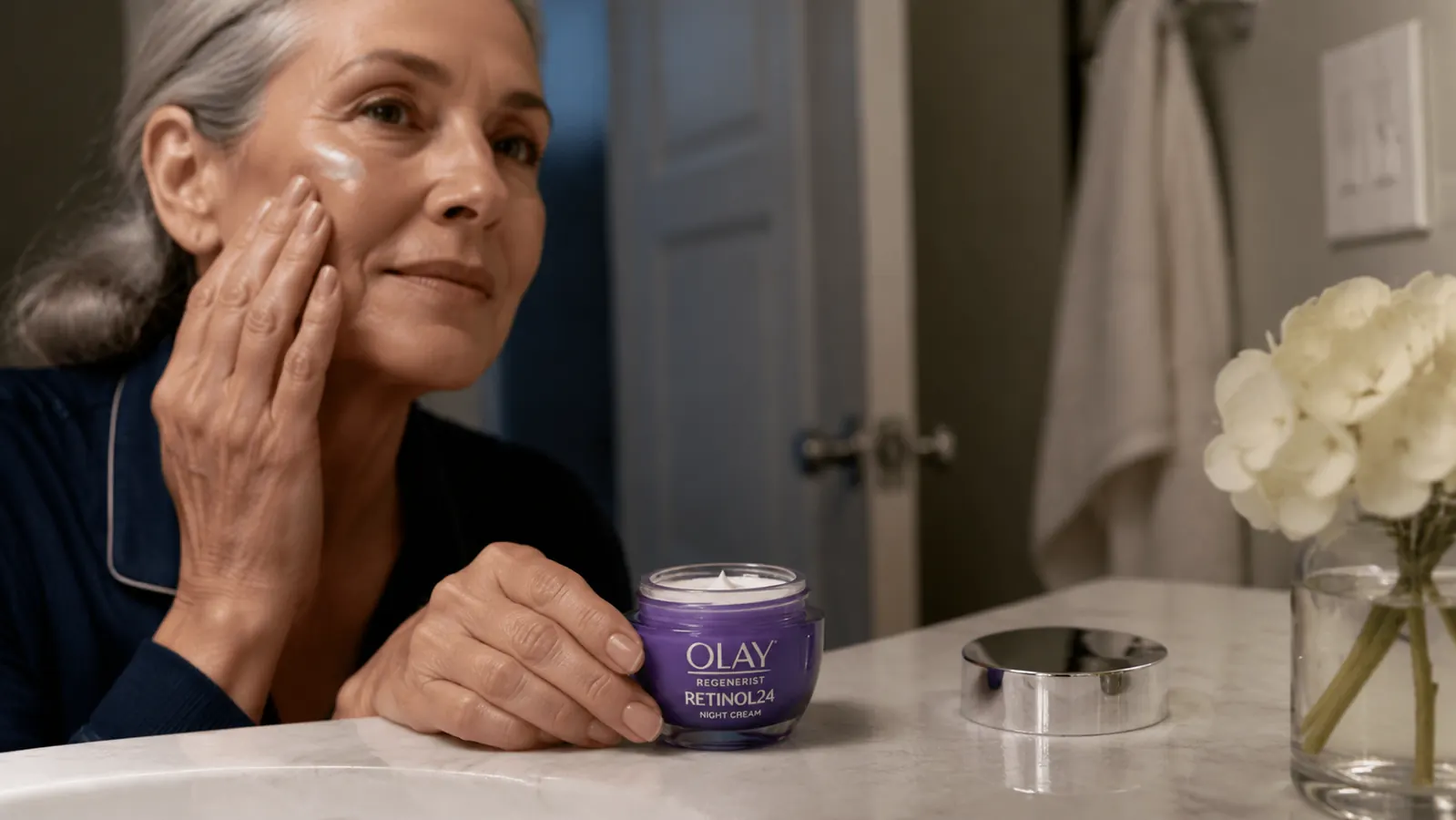
I spent two evenings reading ingredient labels and review threads. I wanted something with a real retinol concentration, not just a token amount buried at the bottom of the list, but also a formula with enough emollients to buffer the irritation that sensitive, mature skin tends to feel. The Olay Retinol Night Cream kept showing up. It has retinol alongside peptides, niacinamide, and their triple collagen complex, which sounded like useful company for the retinol to travel with. The price was reasonable. I ordered it.
I wanted something with a real retinol concentration, not just a token amount buried at the bottom of the label. But I also needed it to be gentle enough that I would not wake up with a raw, peeling face.
The first two weeks were uneventful. I used a pea-sized amount every night, patted it over clean dry skin, and waited. No peeling, no redness, no stinging. I was either pleasantly surprised or mildly suspicious, depending on the night. By week three I had a small patch of flakiness near my chin, the kind you can feel before you see it. It passed in four or five days. I backed off to every other night for a week, then went back to nightly. After that, nothing. My skin adjusted.
If your dermatologist has been nudging you toward retinol and you keep putting it off, this is a low-risk place to start.
The Olay Retinol Night Cream pairs a real retinol concentration with peptides and niacinamide, so it does the work without stripping mature skin. Worth checking the current price before you decide.
Amazon Check Today's Price on Amazon →
By month two I noticed two things. First, my forehead lines looked a little softer in morning light. Not gone, not dramatically reduced, but softer, the way fabric looks when you steam it. Second, the texture of my cheeks was smoother to the touch. I could feel it more easily than I could see it. My foundation, which I wear lightly, sat more evenly than it had in the previous year. I did not add anything else to my routine during this period, so I cannot attribute the changes to something else.
The things that did not change: the deeper furrow between my brows, which has been there since my late forties and is above the pay grade of any over-the-counter cream, and a couple of persistent dark spots on my left cheek. The niacinamide in the formula is supposed to help with discoloration over time. By month three I saw some lightening on one spot but not both. I want to be straight about that because a lot of retinol products promise dramatic dark spot results and the reality is slower and less complete than the marketing suggests.
The formula itself is a thick, white cream that absorbs without leaving a greasy film. I appreciate that because I sleep on my side and I do not want to be staining pillowcases. It is fragrance-free, which matters to me. I have had reactions to fragrance in creams before, particularly at night when the product sits on skin for hours. Olay kept it simple there, and my skin thanked them.
What I Would Tell You If We Were Sitting at My Kitchen Table

Here is what I would say if you were across from me with a cup of coffee. Retinol works, but it works slowly and it works best when you stick with it past the point where you feel impatient. If you have been putting it off because you are worried about irritation, a well-buffered night cream like the Olay is a gentler entry point than a standalone retinol serum. If you have genuinely sensitive or reactive skin, start every other night and give yourself three or four weeks before going nightly. Do not skip the morning sunscreen. Retinol makes your skin more sun-sensitive and if you are not protecting it in the daytime you are working against yourself.
I would also tell you to be honest with yourself about what a night cream can do. It is not going to erase the lines that have been setting in for ten or fifteen years. What it can do, consistently used, is slow down the formation of new ones, soften the look of the lines already there, and improve the overall quality of your skin's surface. For me, that was worth starting. I wish I had started at 55 instead of 61, but that is a different conversation.
If you want more detail on exactly how I worked it into my routine, including what I layer under it and how long I wait between steps, I wrote that up in my longer review. You can read it here: Olay Retinol Night Cream Review: What Happened to My Skin After 3 Months of Nightly Use. And if you want to understand what the research actually says about why retinol night creams work differently than plain moisturizers, this piece on 10 reasons a retinol night cream outperforms a basic moisturizer is a good place to start.
Three months in, I would buy it again. That is the honest answer.
The Olay Retinol Night Cream is not a miracle product. It is a well-formulated, reasonably priced retinol cream that does what retinol is supposed to do when you use it consistently. If you are ready to finally give retinol a real try, check the current price and see what reviewers are saying.
Amazon Check Today's Price on Amazon →